Wednesday, 18 August 2021

Seal of approval...

Being one of the UK's largest wildlife rehabilitation hospitals, Stapeley takes in its fair share of Grey Seals from all over the North West. Whether they've been found beached or injured, the team here are always prepared to provide these guys with all of the care they need in order to recouperate enough to be released back into the wild.

Due to their strong bite potential (Google seal finger if you want to be grossed out), students have to be supervised when cleaning these guys out or feeding them. See below photo for a very ~marginally~ angry seal.

Despite their potential for a bad rep, they're usually pretty calm and are more than happy to just observe you with those huge eyes as you scrub their pool around them. Rarely in the centre for more than a couple of weeks, all seals pictured here have already been released back to the areas that they were found (After being confirmed healthy and ready of course!).

The most common reason for seal pups being bought into centres is that people mistakenly think they've been abandoned. If you see a seal pup alone that looks otherwise fit and healthy, and is showing no signs of distress, monitor it from a safe distance for 24 hours before calling it in.

If the mother does not return within 24 hours or the pup looks sick or injured, please call the RSPCA on 0300 1234 999.

Chelsie Hirons-Major
Student Placement
To support the ongoing work of the wildlife hospital, during this extremely difficult time, please donate to the Wildlife JustGiving site.

Saturday, 7 August 2021

Foxy Business

Time to tell you all about one of the least popular jobs at the centre: cleaning out the fox runs.

Not a job for the faint-hearted, scrubbing these guys' pens is a gruelling 2 hour workout first thing in the morning. I'm very thankful for my facemask when it comes to this job...


There's no special technique for this one, it really is just a case of scrubbing with disinfectant and giving them a really good hose down. On the hotter days the cool spray from the hose is a welcome relief!


Sadly though, the harsh reality of Wildlife Rehabilitation is that it doesn't always work out and sometimes we have to make tough decisions. Our animals have to remain wild so our approcah to looking after the animals is always a 'hands off' one. Which is criticial, especially for our cheeky fox cubs who will be going back to the wild soon.


The Centre is getting busier by the day, as the summer goes on. The team at the centre has to put in more and more work to make sure that all the animals in care aretaken care of and prepared as best they can be for a return to the wild. This means increasing vet bills, food bills and staff workloads!


Please consider donating or volunteering some of your own time to helping out animals in need, I promise you, you won't regret it.

Chelsie Hirons-Major
Student Placement
To support the ongoing work of the wildlife hospital, during this extremely difficult time, please donate to the Wildlife JustGiving site.

Thursday, 5 August 2021

This week at the centre was one of overall success for the animals on site. After the uncertainty of the Buzzards last week, it was nice to see hard-work paying off for the students in the form of releasing some of the hospital's inmates! The team had a hand in releasing lots of birds including a group of Herring and Lesser Black-Backed Gulls, and some Woodies that you can see us releasing on site in the videos below :)


This is Abby - one of our year-long placement students currently on site.


Chelsie and Sophie (above) are both short-term placement students, starting their final year of study at LJMU in September 2021.


During their time with us at the centre, Wood Pigeons receive an extra boost of vitamin D in their diets (usually in the form of tasty broccoli being chopped up and added to their seed) in order to support their bones for flight! Wood Pigeons are resident birds to the UK and can be seen all-year-round, easily identified by their pink/grey breasts.


Look out for our next post, coming Saturday!

Chelsie Hirons-Major
Student Placement
To support the ongoing work of the wildlife hospital, during this extremely difficult time, please donate to the Wildlife JustGiving site.

Saturday, 31 July 2021

Meet the buzzards!

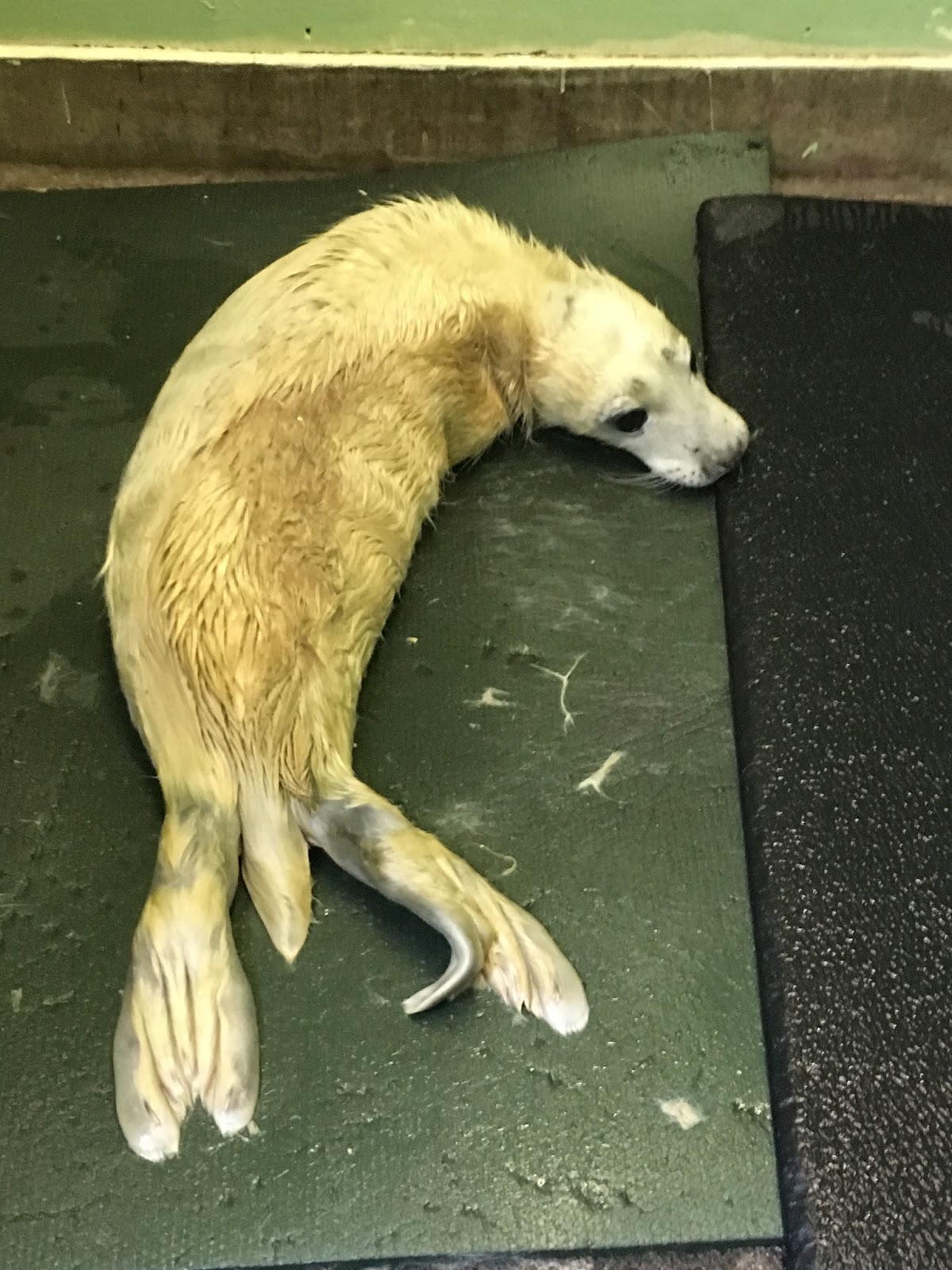
 This week at the centre has been the most different that I've experienced so far. As well as the usual cleaning of fox cages and waterfowl pools - more on this in subsequent posts - I got to help out in the isolation unit of the hospital. Home to all of the animals that are still being monitored for sickness and disease, the pens in isolation are designed to house everything things as small as a single gull chick, to creatures as large as fully grown grey seals (*Cuteness warning - picture of a grey seal pup at the very bottom)! 

During my time in the isolation unit I got hissed at by a very angry gosling, pecked at by a particularly demanding herring gull, but (coolest of all) got to see a juvenile buzzard hand-fed and even helped affix a tail-guard to him. Talk about up close and personal...

Later that day, whilst myself and another student were preparing the evening feeds, we were asked to go and help crop-tube feed the two buzzards that had been released into the aviaries the day before. After being surrendered to us by a captive breeder, these guys were stressed out to the max and had stopped eating, which is where we come in! After immobilising the animal (those talons are sharp), a long metal feeding tube is fed down the birds gullet, through which a super tasty 'chick soup' is delivered via syringe. Nice. Wouldn't be my chosen method of delivery but it's definitely effective! 


These guys will be monitored over the next few days in order to determine whether they're suitable for release. Sadly, animals that come out of captive breeding are less likely to survive in the wild - an affinity for humans gets them into all kinds of sticky situations. It's not all doom and gloom though, because these guys really do not like people! They've already nipped a few of the staff, so their case for release is actually looking pretty good...

More from me next week,

Chelsie

Student Placement
To support the ongoing work of the wildlife hospital, during this extremely difficult time, please donate to the Wildlife JustGiving site.

*Seal pup pic - as aforementioned


Wednesday, 28 July 2021

A little about me...

My name's Chelsie and I'm a mature student at LJMU (Representing the Midlands in the North, it's tough). For a long time in my early teens I was very lost... I spent a long time hopping from industry to industry and never really found my feet. As much as I enjoyed working with the public in Hospitality, it just never felt 'right'.

Fast forward a few years and I have one year of my Animal Behaviour degree left. If you'd told me I'd be here, even as little as 3 years ago, I'd have laughed in your face. But here I am, finally doing something that matters to me - learning how to help those that can't help themselves.

My time at the RSPCA will be brief - hell, I only have a month left even though it feels like I basically just started... but over the coming weeks I hope to communicate just how hard these guys on the ground here work and how much they need and value your continued support! 

I promise to deliver some success stories and fluffy photographs along the way, but alongside that I want to write about the reality of volunteering at a place like Stapeley Grange and the emotional highs and lows the staff at the RSPCA are subjected to every single day. So stick around and you might just feel compelled to start volunteering yourself...


Looking forward to sharing my journey with you all,

Chelsie 

Student Placement

To support the ongoing work of the wildlife hospital, during this extremely difficult time, please donate to the Wildlife JustGiving site.


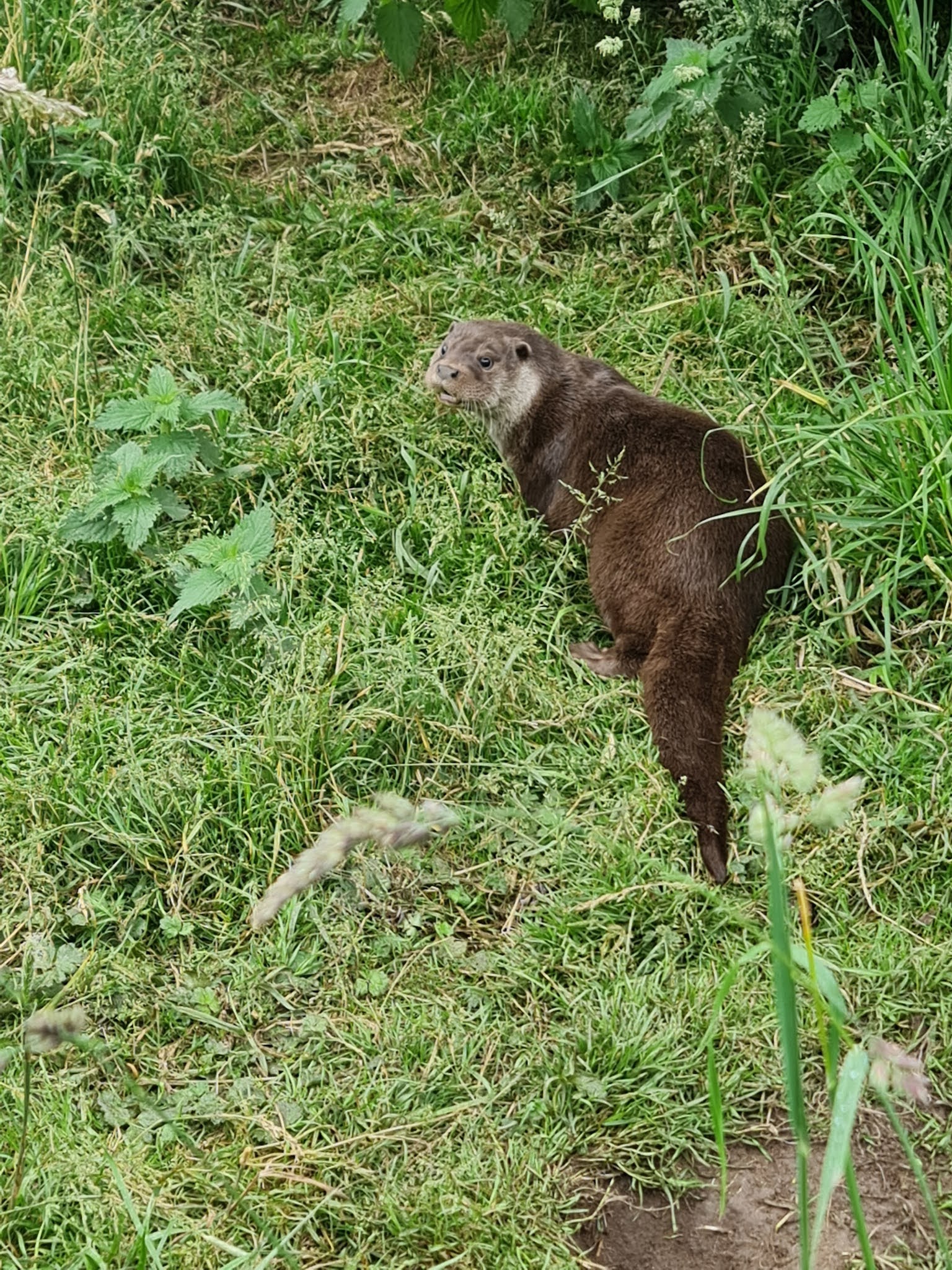
PS. As promised, here's a 'fluffy' photograph of my absolute faves at the centre, some otters! My university lecturers will confirm that I'm a bit of a mustelid fanatic - how could you not be, look at these guys! They're some of the longer-term residents at Stapeley as we have to keep them in for several months before releasing them back out into the wild. That does mean, however, that we really get to see their individual personalities shine through. The guy in the 2nd photograph is a very cheeky little chappie! Hopefully by the next post I will have sussed out how to embed video, and that'll be a real treat for you all :D


Tuesday, 30 May 2017

'Rhos-on-Seal'

With only 3 months left of my year long placement at Stapeley Grange, I feel that time has flown by, and as they say 'time flies when you’re having fun' (and working hard!). The day that will be most memorable to me was last Thursday, when I was cleaning and feeding the many ducklings we have in care at the moment and Wildlife Assistant Rob finds me and asks whether I would join him in releasing a seal. 

Unsurprisingly I jumped at the chance and we were soon on our way after getting the seal out of its pool and into a large vari kennel and into the back of our van.  The grey seal came to us in January as an orphan.  Initially he was tube fed fish soup and then hand fed fish until he was then eating on his own.  After some months he was transferred down to RSPCA East Winch (Norfolk) where they have larger, deeper pools.  He weighed around 60kg on release and with male grey seals weighing up to 300kg in the wild, he still has a bit of growing to do! 


We were going to be releasing the seal, named Colin, at Rhos-on-sea. Once we had found a suitable site for release, we carried the seal down to the water.  It was essential we released the seal at high tide, so that as the tide drew out, it would encourage the seal out into the deeper water.  The time finally came, after 5 months in care, to open the cage and release Colin back to the wild.


As soon as the door was opened, Colin hurried out and into the water without hesitation - which was amazing to watch.  He stuck around for a couple of minutes before making his way along the shore and then out of the bay. We expect he will migrate and integrate into a colony to breed. 


The whole experience was one I will never forget, particularly as I have seen first hand the progress he had made over the past few months.  I now fully appreciate the hard work that goes into rehabilitating such a large animal; I was so grateful to the team for allowing me to help!

Catherine Smith
Student Placement

'If you would like to help RSPCA Stapeley Grange with a donation of just £3, simply text RSPCA2 to 70007' Texts cost £3 + standard network rate. 


Friday, 26 May 2017

A Visit To A Release Aviary

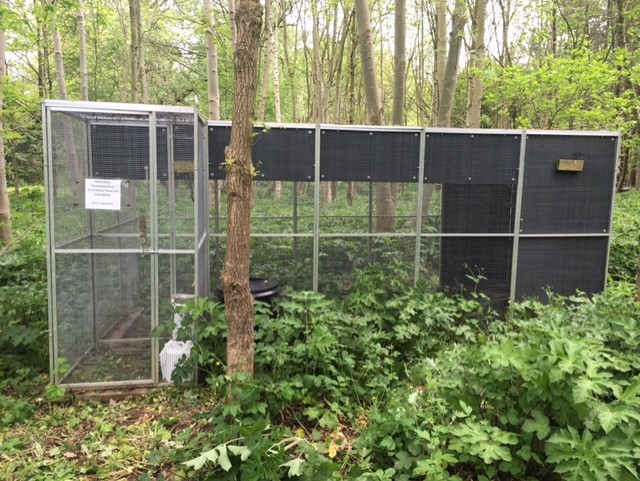
On Friday 19th May I went with Wildlife Assistant Rob to a release aviary close to Stapeley Grange. We took six Mistle Thrushes that had been in our care for a couple of weeks, along with food and water and released them into the aviary. The aviary is situated in a woodland and made out of wire mesh panels.  This is the final stage for the birds; they are subjected to all weather conditions and sounds but have the security of the aviary which protects from potential predators. 


Everyday a wildlife assistant travels to the aviary to give the birds fresh food and water… Rob said he might even trust me to do it! 

After 10-14 days a hatch is opened on the side of the cage and the birds are allowed to leave the aviary, as and when they please.  All of our birds released from these aviaries are ringed with a BTO ring in case they are seen in the wild.  They may even find themselves in our care again or even picked up at another wildlife hospital. 


The aviary is used for a number of species over the summer including thrushes, starlings, house sparrows and blackbirds.  Soft release protocols are always our preferred release options but our mobile aviaries also free up space in our main aviaries which allows us to get our birds out quicker and prevents a backlog of animals in the wildlife hospital.  The birds soon began to bathe in their water bath and fill their beaks with the food provided; bird seed, prosecto and meal worms provided.

Catherine Smith
Student Placement

'If you would like to help RSPCA Stapeley Grange with a donation of just £3, simply text RSPCA2 to 70007' Texts cost £3 + standard network rate. 


Fox Enrichment

After a few weeks of bottle feeding and once they were eating solid food (meat and day old chicks), signed off by the vets and wormed, a few groups of our fox cubs were ready to be moved from their inside cubicles to our outside fox runs.  We took them out in skippers, put them in the run and opened the doors.  We watched for a while (from outside) and they appeared quite hesitant to start with but after a while they were sniffing around their new environment. They eventually found their den and disappeared.


Each run contains a concreted area (for hygiene purposes) and a small den where the cubs will spend much of their time initially.  We added tyres and pipes for enrichment and bark chippings to make it more representative of the wild.  Currently they are being fed twice a day but whenever time allows the team try to enrich the animals by enriching the pens and hiding / scattering food. Under Rob's guidance myself and fellow student Jenna drilling holes into logs in which we filled with donated dog food food.  Each run has a camera set onto motion sensor setting which allows us to check the foxes without interfering with them in anyway.  It is so important that we keep our wild animals wild which is reinforced to Jenna and I constantly by the team.

Jenna and I are looking forward to checking out the video tomorrow to see if all our hard work was worth it.  (Update: everything was gone the next day and it kept them busy for a while so all our hard work was worth it).

Catherine Smith
Student Placement

'If you would like to help RSPCA Stapeley Grange with a donation of just £3, simply text RSPCA2 to 70007' Texts cost £3 + standard network rate. 


Tuesday, 9 May 2017

A Purrfect Day

On my first day of my marketing placement here at the RSPCA Stapeley Grange Nantwich, I was asked to help out in the cattery. Straight away I was very happy and couldn't wait to get stuck in and meet all the cats.

Upon entering the cattery I noticed immediately that most came straight to their doors to meet you and enquire as to where their breakfast was.


When cleaning the rooms it was hard to not be distracted by them. Some cats were playful, running around with their ping pong balls and toys, others daring to escape from their rooms and visit their neighbours, some were quite shy, however most just wanted a good cuddle and a fuss.


I met one cat in particular who stood out to me when cleaning her room. Her name was Pearl and she was a tiny grey feline who was quite nervous at first but quickly began to play with me and hunt for her toy mice.

Once all the cat's room's had been cleaned and breakfasts devoured I would say it was a good job well done.

I am now looking forward to going into the animal hospital on Thursday to meet some of the wildlife and will be posting on the RSPCA Stapeley Grange Facebook and Twitter for the next few weeks. 

Rebecca Fletcher
Student Placement


'If you would like to help RSPCA Stapeley Grange with a donation of just £3, simply text RSPCA2 to 70007' Texts cost £3 + standard network rate. 

Tuesday, 14 March 2017

4 Blind Mice

During my time here I've come to realise that we really do care for pretty much all forms of wildlife, from the great to the small. Most recently our tiniest additions were a group of woodmice. When they arrived they were in a poor state, very cold and skinny, with their eyes still closed. 


To begin with the mice were syringe fed a milk and farleys mixture via cannulas as their mouths were so small. Luckily for staff they took to it well and after just four days were feeding for themselves, lapping farleys and milk from a bowl. This is very beneficial to the animals as it means staff can handle them much less often and they have a less stressful time in care before release. 


.

It's just a matter of time now before we are able to release them back to the wild, definitely the best part of the rehabilitation process

Jenna Haslam
Student Placement

'If you would like to help RSPCA Stapeley Grange with a donation of just £3simply text RSPCA2 to 70007‘ Texts cost £3 + standard network rate

Friday, 10 March 2017

Cubs galore!

It's still on the quiet side here at stapeley (although Spring is around the corner) but as a result of the stormy weather we've had recently we've encountered some touch and go situations, keeping staff on their toes! 

Many of you will have seen the news report on little Daffi but for those who haven't I've added a few very cute pictures. She was separated from her mother during storm Doris and was brought into care with us. To begin with she was given milk feeds every three hours but she quickly gained strength and moved on to a milk and trout mixture. 


She's now on just three feeds per day and doing very well. The staff are on the look out for a pairing for her. A further two otters were brought in later in the week. They were the same age as each other so it was assumed that they came from the same litter, so have been kept together. With these new arrivals, our otter total has been brought up to a huge 8 in our care!! 


I was also lucky enough to be in for the arrival of a tiny badger. The centre had previously cared for young badgers, the smallest weighing 350g but this baby was only 94g!! She was aged at only a few days old so after a few frantic calculations a feeding plan was drawn up and she was given milk formula every two hours. Luckily, she took to the syringe well and had a healthy appetite. 


After a few days with us she was transferred to Cuan Wildlife Rescue where she is now receiving around the clock care. It was sad to see her go as the staff had a real soft spot for her but she is doing well with our friends at Cuan now and will return when she is ready to join other cubs. 

Jenna Haslam
Student Placement

'If you would like to help RSPCA Stapeley Grange with a donation of just £3simply text RSPCA2 to 70007‘ Texts cost £3 + standard network rate


Wednesday, 21 December 2016

Swans a plenty at Stapeley

Throughout the year we see lots of swans and geese admitted to the wildlife hospital.  Many of the swans are brought in as juveniles, particularly at this time of year, and are reported by members of the public as being unable to stand and very weak.  When a bird is showing signs of weakness it may appear that it has problems with its legs but this is often not the case.

A case which I worked on this week was a good example of this.  The cygnet arrived on the 2nd  December, found by a member of the public, who was concerned the bird could not stand up and instead kept falling forwards.  The cygnet was extremely underweight when he arrived, weighing only 4.3 kg.  There was however a swelling on its wing joint.  On further investigation the x-ray showed that there was no serious damage; it was prescribed oral antibiotics, some pain relief and given plenty of food.


The team have kept a close eye on his weight over the past ten days and today he appeared healthy; was walking well and putting on weight.   He had his final check up this morning and the vets were happy to sign off his treatment and release him out onto one of our outdoor pools (pictured above) with all the other waterfowl, which is always nice to see.  The staff will continue to monitor his progress over the coming weeks until we are happy that he is strong enough to be released back to the wild.

Jenna Haslam
Student Placement

'If you would like to help RSPCA Stapeley Grange with a donation of just £3simply text RSPCA2 to 70007‘ Texts cost £3 + standard network rate


Saturday, 26 November 2016

'Today gets the seal of approval' - Catherine Smith

After a morning of cleaning and feeding lots of hedgehogs I spent some time with wildlife assistants Michelle and Sophie in isolation. We were about to attempt to tube feed a seal...

The grey seal had been rescued in from Red Wharf bay in Anglesey on Wednesday (23rd Nov).  It had been monitored for 48 hours and no parents were seen during this time so help was needed. The orphaned seal is said to be about 2 weeks old; she weighed in at 15kg on admission. 


Trying to minimize stress as much as possible Michelle covered the seal with a towel and restrained it by kneeling over its back and pinning its head down (gently but safely), making sure her fingers were nowhere near its mouth! Then Sophie aided her with the syringe and tube whilst it was fed down its mouth and into its stomach. She also had the glamorous task of taking its temperature via the rear end. 


It was feisty as expected and made noises I'd never heard an animal make before. Staff here receive lots of training with seals as although they look cute they can give you a nasty bite, apparently. The seal is tube fed five times a day and is currently being fed a mixture of lectade which is a re-hydration therapy with aqua-vitamins and fish soup which is blended mackerel. 

This seal is being transported to RSPCA East Winch Wildlife Centre shortly; they specialize in the rehabilitation of seals and offer more facilities for this. I am confident it will grow and make a full recovery and I am eager to keep up with its story.

Catherine Smith
Student Placement

'If you would like to help RSPCA Stapeley Grange with a donation of just £3simply text RSPCA2 to 70007‘ Texts cost £3 + standard network rate

Wednesday, 16 November 2016

Fox Release

A couple of weeks ago I was lucky enough to be asked to help on one of the last fox releases for this year. The site was quite local at a commercial quarry. Myself, Rob (Senior Wildlife Assistant) and Sophie (Wildlife Assistant) loaded all the kit into the car and trailer and eventually managed to coax all five juveniles into a box for transporting. I drew the short straw and had to sit in the back nearest to the foxes which if you've ever smelt a fox before then you'll probably understand and feel my pain. 


To our delight, we were joined by a couple of members of staff on site. The RSPCA most of their orphaned mammals species through a method of release known as a 'soft release' which means they are first transferred to large cage at the release site and then support fed and watered over a period of three weeks after being released, with the amount of support feed decreased over time to help bridge the transition between captivity and living in the wild. 

The cage is made up of eight wire panels, so the first step was to stride out a suitable area and then dig out a trench to drop the panels into, before then bolting then together. Setting the cage into a trench helped to prevent the foxes from digging out, in theory! Once built the box with the foxes in was placed inside.  Branches and leaves were also put inside and on top of the cage to make it more natural, along with some food and a bucket of water.

After everything was finished it was down to Rob to open the box and to make a quick escape. On this release, we were lucky enough to see one very brave fox emerge and have a quick feed before we had to leave. The foxes will be caged for one week before being released and then support fed for the further three weeks.

Jenna Haslam
Student Placement

'If you would like to help RSPCA Stapeley Grange with a donation of just £3simply text RSPCA2 to 70007‘ Texts cost £3 + standard network rate

Wednesday, 9 November 2016

'Wotter day'

Last week I had the amazing opportunity of helping to release two otters that have been in Stapeley Granges' care for about 10 months. They came to us on Christmas Eve 2015 as orphans by storms from Rea Brook, Shrewsbury. They were named suitably by the staff as Mary and Joseph (pictured below). Over the next ten months the pair were fed and monitored closely and raised in an excellent otter enclosure, built with the money W G Harvey Discretionary Settlement generously donated. 


The first task in this release was to catch the otters to move them into an empty run so they could be quickly boxed up the next morning. This sounds like a fairly simple task although it took nine members of staff and volunteers to heard the otters around their enclosure and towards the door where a box was placed and the door was quickly shut. It was like a military operation as otters can be quite vicious if approached in the wrong way. I was thankful to be involved in this, let alone what was yet to come.

The next day I went to the release sight with Supervisor Rob and two volunteers to create an enclosure that the otters would live in for the next two weeks until we would then open the fencing to allow them to move on and find suitable habitats for themselves. We used around 50 metres of electric fencing to create this area and had to clear a lot of nettles and weeds as it was so over grown. A pool was placed in the area which was filled with the near by river water, along with tyres and tubes for the otters enrichment. Volunteer Graham put up two camera traps which are motion censored so we can see the otters reactions to their new surroundings. The next day, we traveled again to the site but with the otters in the back of the van. A journalist from BBC radio Stoke arrived who interviewed Rob whilst I made the finishing touches to the fencing. We then carried the box containing the otters over the fence and stood by while Rob opened the sliding door. While one otter stayed in the box and remained unseen the other, believed to be the female, shot out without hesitation and began scouting her surroundings for us all to capture on video. Rob mentioned this was quite rare and hasn't happened in the last six years in all the releases he had done, which made the experience even more exciting. 


Otter populations are on the increase in the UK since the 1960's and 70's where they were extinct in most parts of England, but can be now found in every English county! The work of the RSPCA in rehabilitating sick, injured or orphaned animals plays a huge role in the conservation of species populations and I am so proud to be a member of this organisation. Looking forward to get involved in more releases next year!

Catherine Smith
Student Placement

'If you would like to help RSPCA Stapeley Grange with a donation of just £3simply text RSPCA2 to 70007‘ Texts cost £3 + standard network rate

Monday, 7 November 2016

It's hog time for placement student Jenna Haslam

My name is Jenna and like Catherine I am also on a year long placement here at Stapeley Grange as part of my degree. I study zoology at Swansea University and when I was offered the chance to take a year out to gain some experience I jumped at the chance and applied to be a wildlife assistant for the RSPCA. My intention was to get an insight into the sort of career that I will potentially pursue after I graduate and since I started here at the beginning of September I haven’t been disappointed with the experience! 

I have to admit that the foxes are my favorite so I am very much looking forward to getting to work hands on with them next Spring but for now I’m getting very well acquainted with the resident hedgehogs and we have quiet a few!


Before I started I’d never seen a hedgehog up close and now I feed, weigh and clean out an average of 20-30 every day. Its so rewarding when you can see the recovery over time with individuals gaining weight until they are big enough to be released. We then get to box them up so they can be returned to the wild.  It’s amazing how each individual has its own personality and how quickly you get to know each character from working with them each day; we get to know who the messy ones are too!! 

Jenna Haslam
Student Placement

'If you would like to help RSPCA Stapeley Grange with a donation of just £3simply text RSPCA2 to 70007‘ Texts cost £3 + standard network rate


Monday, 17 October 2016

A hungry gannet and stung hog

Going into my tenth week at Stapeley Grange as a student on a placement year I can see I am being given more and more responsibilities regarding treating the animals with their specific medications. Personally, I feel I have come a long way, as when my cat was first diagnosed with diabetes, injecting him twice a day was more of a nerve wrecking task than it should have been. However now, I feel I am confident in injections and oral medication and also learning the art of crop tubing

I have also been given other tasks such as bagging up a fully grown swan for release which was quite an experience, along with hand feeding a Gannet in isolation (pictured below) and helping Supervisor Rob dismantle a fox cage at a release site. This was a physically tough task but allowed me to see a site where foxes are taken for a ‘soft release’ meaning they may frequently come back to the cage for food that we take before finally moving away and finding a suitable habitat for themselves.  


One particular case which caught my attention whilst working in the Orphan Room was a hedgehog with a significantly swollen tongue. The vets came to the conclusion it was stung by or had tried to eat a grounded been. Many people thought the hedgehog was a lost cause and would have to be put to sleep but after a few days of steroids and other treatments the swelling went down and the hedgehog could eat and drink for itself again. 

Although it is becoming quieter at the centre, as we move to winter, there is still as much cleaning and washing as ever. The wash room will be tidied and cleaned once a day but 24 hrs later it is full of used skippers and cages that need scrubbing again - but if nobody did these jobs, we would run out of accommodation very quickly.

Catherine Smith
Student Placement